
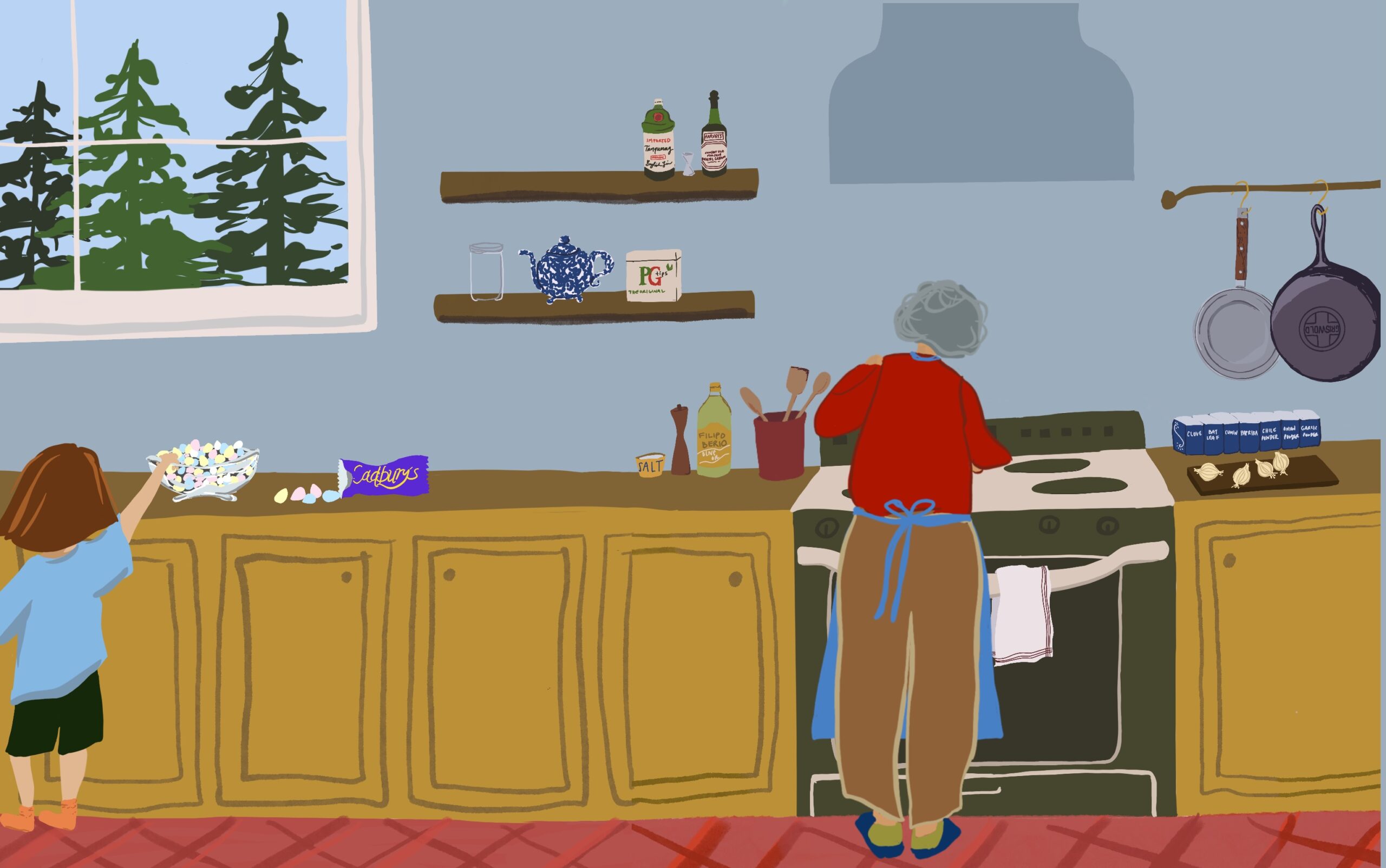
Whether it’s a worn wooden spoon or a hand-me-down skillet, cookware offers connection to (and nourishment from) loved ones we’ve lost.
WORDS | Heidi Chaya ILLUSTRATIONS| Maggie Perrin-Key
Some may call it superstition, but it seems that domestic objects can retain energy. Worldwide folklore is animated with tales of kitchen witches, household spirits, mischievous but not malevolent beings … mundane objects with sentience and soul.
You can feel it settled among the dusty silence at roadside antique shops, in attics and estate sales — wherever forgotten relics await rediscovery, renaissance and reincarnation. The first vintage skillet I ever purchased has convinced us that its perfectly seasoned surface, like a black mirror, is an enchantment.
Perhaps the emotion and intention that we pour into our food is captured in our everyday tools of the hearth and home. Like the transfer of heat and iron into the ingredients from the skillet, the spirit of the cook is embodied in what is cooked.
I didn’t know my great grandmother as a younger woman. I remember her being stern, and even steely. But a deep love for life and her family was conveyed through her cooking, and from the first bite, I knew I wanted to cook like that when I grew up.
I knew Louise Minerchak as a strong British woman who came over from England during World War II and ultimately outlived the queen. She was wrinkled and gray for my entire life, but as I matured, I understood that her age belied a rare and exemplary kind of wisdom and resolve.
The stories she shared about her past were few, but she never shied away if prompted. She helped muster people onto buses during air raids, and recalled (with near fondness?!) one bus driver who liked to “try to outrace the falling bombs.”
She remembers the gas masks handed out to civilians, and her first dance with my great grandfather, Joseph Minerchak — an American soldier she met in England — and even the jacket she was wearing that night. Great grandma liked gin and loved tea — and woe betide you if you prepared it wrong. I only made that mistake once.
Great grandma had the presence of a true matriarch, though I never felt she imposed it on us. My earliest memories of her, and of my great grandfather, were when we visited during my Easter breaks in elementary school. They lived in a retirement community in sandy, piney south New Jersey. We always ate dinner not inside at their stately old dining table but in a sunroom that smelled of warm plastic chairs and Astroturf. We’d watch blue jays and neighborhood cats through the glass walls as spring rose up all around us.
We’d talk — she in her adamant British accent (which never diminished) and my great grandfather humming and laughing in his pleasant and placid voice. And then she’d bring it out: a sizzling glass baking dish with a rich beef pot roast on a bed of tender roasted potatoes and carrots. It was served with Yorkshire puddings: chewy, fluffy, eggy clouds of pastry that you bathe in savory gravy, the dripping from the meat.
Then she’d always follow up with her overstuffed, towering, sugar-showered apple pie, looking like the last snowdrift of April — the one from the quiet, overnight storm that closed school and unexpectedly and delightfully extended spring break by another precious and fleeting day.
As the years went by, I saw great grandma less, but appreciated my time with her more. I remember her giving me simple advice about liver that solidified my interest in cooking and shook sense into my culinary aspirations: “If you’re going to cook livah, make sure the pan is very hot!”
I hear her every time I’ve ever made liver and onions since, and still consider it to be the defining dish that taught me how to cook. I promised her, more than once, that I’d cook her a grand beef curry with golden raisins, the way they did at the curry houses in Brighton.
But I never did.
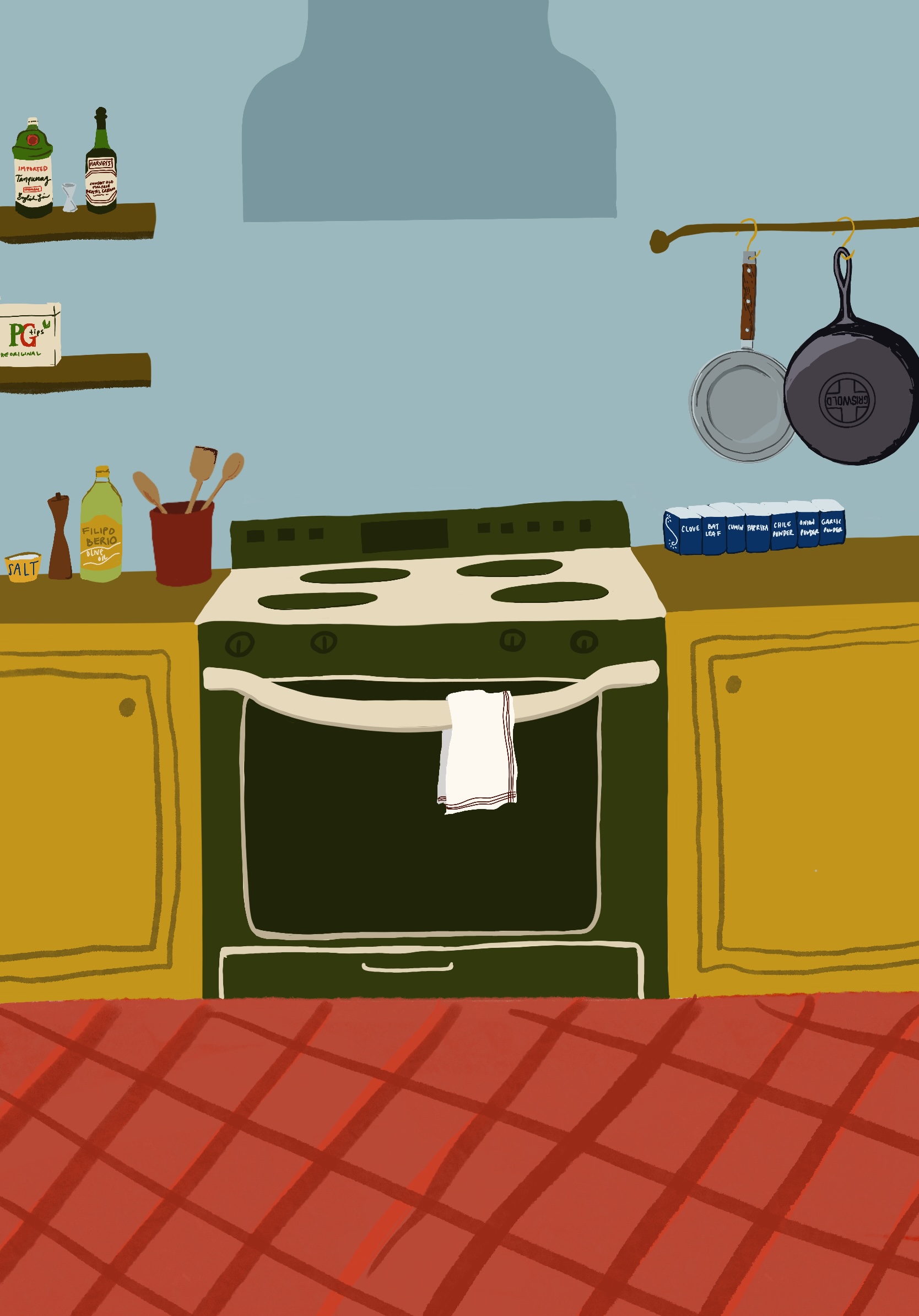
My great grandmother passed away at 102. We never found the gas mask which she’d offered to me (perhaps for the best). So I welcomed her prized cookware set into my home: a silver symphony of stainless steel and aluminum with rosewood handles. When my partner and I rubbed mineral oil into the thirsty grain, listening to the bagpipe music she’d loved, it was bittersweet. I felt I’d missed an opportunity to get to know a legend in her kitchen, because my own busy life got in the way of appreciating hers.
Great grandma had splurged on the set when it came out: the Faberware Advantage collection, circa 1979. In fact, it was apparently discontinued due to its impractical cost, and is now highly desired by collectors. I certainly appreciate the craftsmanship and quality, but what I value most is that my family enjoyed countless home-cooked meals in these pots and pans.
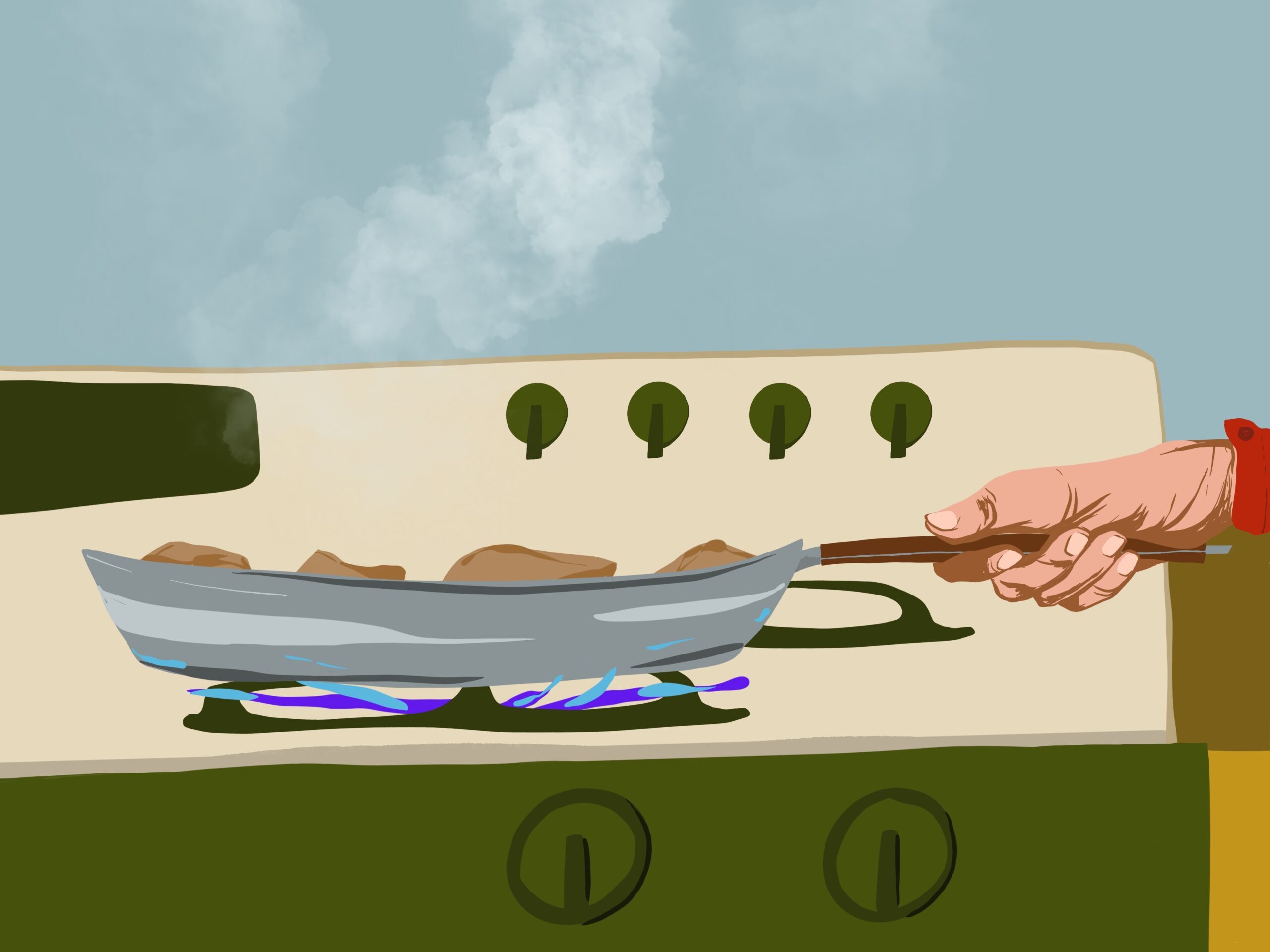
But one in particular felt like pulling the sword from the stone. The first time I cooked in what immediately became my favorite pan, there was a palpable connection to my great grandmother through time and space. Through food. Through the very matter that makes us.
It’s a work of art. Nearly a musical instrument. The handle is of a thoughtful length that makes a potholder unnecessary. I place my hand where she placed hers, over a stovetop thousands of miles and days away. I wish we’d known each other better, but what’s certain is that we shared a yearning to feed our loved ones, in body and soul, with this very same pan. To honor the ingredients and the sacred tradition of the shared dinner. In my family, great grandma’s cooking remains the stuff of legend.
I admire this pan. It carries heat beautifully, with a perfect weight. It’s like an embrace at the end of a vernal vacation. A warm cup of tea, a spice-scented room. A belly full of Easter candy (colorful Cadbury brand, of course) that you’d steal away to eat before dinner, because you knew she’d yell at you if she caught you. And you didn’t mind.
My most sacred and reflective meal remains the first deer of the year. My great grandfather was deeply fond of deer camp, and great grandma took great pride in cooking venison, which my father says that these pans probably know better than beef.
So that was the first meal I cooked in this cherished heirloom: venison cube steak with brown gravy. This is simple southern country fare, and it reminds me of the first time I ate deer meat and subsequently learned that a person could go out in the woods and get their own food. This notion drives me to this day. Every bite of food is a connection to the past, and an investment in the future, if we seek that which nourishes us.
I always know what pan to reach for when the time comes around again to eat meat fresh from the field, the way my relatives and ancestors did. It means everything to cook it in the same vessel.
I hope great grandpa smiles on this humble huntress. And perhaps great grandma would be pleased to see that my rendition of liver and onions is a point of pride in my recipe repertoire.
It could be an old weathered wooden spoon, smoothed with repeated use. A hand-me-down skillet that’s always perfectly seasoned, as if haunted by a benevolent ghost. I believe that something lives on in culinary implements that transcends, yet encourages the irresistible ephemerality of food, the alchemy of cooking. Ingredients are wholly transformed, creations are destroyed, changes occur that ultimately allow our bodies, minds, hearts and spirits to persist and prosper, in the kitchen and beyond.
This article first appeared in our 2025 Fall Issue .
Heidi Chaya is a freelance writer working in regenerative agriculture in the Shenandoah Valley. Something of a food scholar and culinary voyager, you might find her hunting, fishing, foraging, exploring the farmers’ market, and reveling in all nature’s bounty in her kitchen.
